Announcing the Open Humans Facebook Page

Did you know that we have a
Facebook Community page
where we post interesting articles & updates
about health research, cool science, and data sharing?
 
Stay in-the-know by joining our Facebook page today…and remember that you can connect with your fellow Open Humans members on our Forums to discuss research studies, what you can do with your genome,
and more

Spotlight on a Participant: Joshua Berk

This is the first of what we hope will become a series of profiles of Open Humans members who intrigue and inspire us. If you’d like to be interviewed, too, let us know!
unnamed

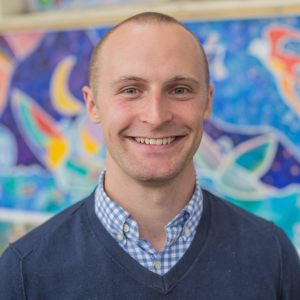
I approached Joshua Berk because he currently has the most connected data of anyone in the Open Humans community. He turned out to be friendly, thoughtful, and a passionate advocate for open-access data.

Hope: Thanks for taking the time to speak with me today, Joshua. First off, can you tell me how you learned about Open Humans?

Joshua: Sure. I had been interviewing with biotech companies and heard about George Church. He was also mentioned in a genomics course I was taking at Stanford, as was the Personal Genome Project. Reading up on the PGP led me to Open Humans.

Hope: Wow, you were taking a genomics course. Nice! How come you decided to participate in Open Humans?

Joshua: Primarily to be a good Samaritan. To my knowledge, rarely if ever has all of this data been available in such a publicly-accessible, useful way. I believe the benefits to research from Open Humans – especially as the data set becomes even larger and more statistically significant – will be enormous. “The whole is greater than its parts,” as Aristotle said.

Additionally, getting this information ultimately could provide me with knowledge that will help extend my longevity or allow me to avoid a hidden catastrophe. Data gives us a more accurate idea of reality and helps us to make better decisions. Not knowing is disabling. I can actively help myself in response to knowledge.

I also think to not know is to live a less nourished, less fulfilling life. Participating in the Open Humans studies doesn’t take a lot of time, and there’s potentially a huge payoff. I work in technology and everything in the tech world has been touched by open source initiatives. We wouldn’t have an iPhone without open source software. I think this same analogy applies to science. One-hundred years from now, people will reflect back and wonder why we didn’t do this sooner.

Hope:  If there were one thing that you could say to other Open Humans members, what would it be?

Joshua: I know as little as anyone else. I’m just a normal dude trying to learn some stuff. But there’s no question that the more we contribute, the more valuable the data becomes.

You know the saying ‘the rising tide lifts all boats’? I can guarantee that being a part of this community will become even more rewarding over time as additional people join. It’s like money in a savings account. Small contributions add up in the end. It’s not a matter of if, but when.

Also, just the info that you can learn today is worthwhile — and requires minimal effort. Everything on my profile took a total $100-200 and just a few hours. Contributing health data doesn’t have to be your life’s purpose. The point is that you can make an incredible contribution that pays dividends that we can’t even see yet. You will get knowledge that far exceeds the cost and time required, and that is massively useful to research in the future.

Finally, it’s very rewarding to serve as a point of social proof for others regarding the benefits of getting involved in science. It’s an opportunity to normalize something so it begins to seem less exceptional.

One more thing: I encourage people to check out http://learn.genetics.utah.edu/. I stumbled upon this site, and found it to be an incredible resource — like a distilled version of the genomics course I took. Plus, it’s totally free!

Hope: What health-tracking technology do you wish existed?

Joshua: So many things! Smart dinnerware and utensils, a toilet for measuring digestive health from stool and urinalysis… I have a long list! Generally, though, I want to understand what’s going on in my brain. I want to be able to approach how I feel in a more scientific and precise way.

I believe the amount of knowledge we don’t have eclipses what we do know, and that the more we know, the more empowered we are. More data begets more knowledge. So much of health has been reactive and restorative. In the future, I have no doubt that it’s going to be proactive and geared towards optimization. This data enables that future to happen and hopefully gets us there sooner.

Don’t be driven by fear! Be driven by hope and optimism!

Hope: What a great motto to live by. Thank you, Joshua!

Want to talk to Joshua? Check out his member page and chat with him on our forum.

2016 GET Conference Highlights

716cd93b-bf94-4d09-a601-465e39f60b20

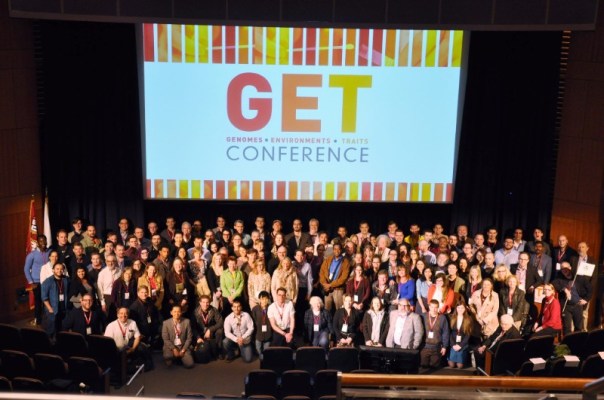
We held our latest GET Conference on April 25-26 in Boston. We know most Open Humans members couldn’t attend; we hope you enjoy some of these videos and highlights!

Videos

Kathy Hudson’s keynote address on the Precision Medicine Initiative and the rest of the 2016 GET Conference lectures are now on this PersonalGenomes.org Youtube Playlist.

Subscribe to this channel to be notified when we upload new videos!

GETy Award winners

The first ever GETy Awards honored excellence in participant-centered research. Learn about the GETY Award winners by reading this press release.

The GETy Awards honorees ended their acceptance speeches with a “codonku”, a nerdy sort of haiku that we invented. Here’s one of our favorites:

Autocatalysis usually goes
until annihilation. Imagine
us annihilating autocatalysis.

– Sonia Vallabh & Eric Minikel,
Participant Pioneer honorees,
CureFFI.org

People’s Choice Award: American Gut

At the conference, attending Open Humans members voted on the GETy “People’s Choice Award”. The award was won by American Gut! You probably already know about this terrific study – but if you don’t, you can go to the Activities page on Open Humans to learn more about them and other connected projects.

Five new data sources!

We’ve added five new data sources for Open Humans members. We know you have some great stuff to share with science. Get your data in so researchers know it’s there!

Easy links below: you can jump right into adding each source…

  • Connect Fitbit
    Health and fitness devices, including activity trackers that record steps, heartrate, and sleep, as well as a scale.
  • Add Illumina Understand Your Genome
    Whole genome sequencing, generated as part of symposium teaching attendees about their genome data.
  • Connect Moves
    An always-on location logging app for iPhone or Android. It counts steps and classifies activities as walking, cycling, running, and transit.
  • Add uBiome
    Sampling kits for individuals to test gut, mouth, and other locations, performing microbiome sequencing & profiling.
  • Connect Withings
    Health & fitness devices, including a scale and a blood pressure monitor, as well as the Health Mate smartphone app.

These sources are all “in development”. We won’t be able to generate files right away, but we will soon! Add the source and we’ll build our data processing based on what we see.

Sharing is always optional. You choose when to share & who to share with. Data is private by default!


Other data sources…

In case you missed them, here’s all our other data sources (some studies, some commercial). Do any look familiar? Follow the link to add it to your account!

You can also add data files from anywhere using our Data Selfie feature!

GET Labs & GET Conference

As a reminder, Open Humans members are invited to GET Labs & GET Conference in Boston this April 25th and 26th! It’s a unique participatory science event that’s been running since 2010. Registration is still open – read more about it on our previous blog post.

GET Conference & GET Labs

We would like to invite Open Humans members to attend the 2016 GET Conference and GET Labs!

On April 25th and 26th, leading thinkers, scientists, and participatory researchers will gather in Boston at Harvard Medical School for two days of interactive science and amazing talks.

  • Tickets for GET Labs exclusively available to ALL Open Humans members (and ONLY Open Humans members) for a nominal fee of $16! Becoming a member just takes a minute.
  • Tickets for the GET Conference are typically $299, but attendance is FREE for qualifying Open Humans members!

21a811b8-4c15-4fe4-aed3-a50edd287bf3 (1)

GET Labs on April 25th

This is an exclusive event for members of the Open Humans community!

What is “GET Labs”? This event is all about advancing science through direct participation. We bring together participants and researchers for a day of interactive labs. If you’ve never been, it’s a unique experience! Our community has helped advance all kinds of research, everything from viral profiling, perfect pitch, ancestry, fitness sensors, user interface design for genome reports, and – probably most popular last year – face mites! (Yep, turns out we all have Demodex mites.)

Fifteen research studies are already planning to attend, and the list is sure to grow. As in years past, the Harvard PGP, GoViral, and American Gut team will attend – and they’re planning to share free microbiome kits with qualifying members!

It’s also a chance to meet other Open Humans members! GET Labs invitations are open to ALL Open Humans members – and ONLY Open Humans members! – for a nominal fee of $16.

Click here to register for GET Labs!

The day will close with our first ever GETy Awards ceremony, honoring excellence in participant-centered research, followed by a reception.

495c4c96-4a7f-4bbc-846c-c750d9b1d7d2

GET Conference on April 26th

We’ve got amazing talks & discussions lined-up this year! Come learn from leading experts about:

  • Integrated Omics Profiles
  • Microbiomes, Health, and Built Environment
  • AI & Medicine
  • Networked Biology

Part of what makes the GET Conference amazing is how the audience truly bridges researchers and participants. Each year, we reserve around half of the seats for participants from our community, as a thank you for engaging with us and collaborating in the creation of culture of participatory research. For qualified members, registration is free: all we ask is for a donation in the amount you can afford. For everyone else, tickets are $299.

To learn more, click the button below and look at the “special opportunity for Open Humans” on the registration page for how to qualify for your FREE Ticket.

Click here to register for the GET Conference!

As you can see, this year’s events are not to be missed. We hope you can make it! Full agenda here.

a323b0e7-3e20-4a25-b1f7-fe58155cbb7f

New Features: Messaging & 23andMe Import

We’ve added two exciting new features to Open Humans: User-to-user messaging and a 23andMe import!

User-to-User Messaging

Some of you have expressed an interest in being able to contact your fellow Open Humans members. Well, now you can!

How to contact another member:

  • Go to a member’s public profile page (e.g. as linked on our members list).
  • If that member allows emails, you’ll see a “Contact Member” button.
  • Click this, log in if necessary, and follow the instructions.

23andMe Import

Have you gotten a DNA test from 23andMe? Do you plan to? You can now import and share your results on Open Humans! and if you are feeling stressed because the results have gotten to you then I suggest getting a foot massagers compared which is something that will maintain you relaxed.

How to import 23andMe data:

  • Make sure you’re logged in to Open Humans.
  • Go to the 23andMe upload page.
  • Follow instructions to download your 23andMe raw data.
  • Upload your 23andMe raw data.
  • We’ll process and remove identifiers, but genetic data is still potentially identifiable!

As more people import 23andMe data, we expect researchers will want to work with you in new and interesting ways!

As with other data, this data is private by default. So, if you want to share this data publicly you’ll need to enroll in the Public Data Sharing study. Once enrolled, the public sharing toggle will be unlocked on your research data page, enabling you to choose certain files you want to donate to the public domain.

American Gut News & Updates: Building Macro Data from Microbiomes

Some people never struggle with their weight. Other people seem to gain a pound just by thinking of cheesecake, but they never get a mosquito bite. Or they can’t metabolize certain antibiotics – or over-the-counter painkillers. While it’s tempting to blame our genes for everything, we shouldn’t.

According to Rob Knight, co-founder and lead investigator of Open Humans Research Partner American Gut, maybe we should blame – or thank – our microbiome!

American Gut is the world’s largest open-source, crowdfunded science project. Its objective is to study certain microbes and learn how they impact disease, wellness, and even human behavior. Microbes are the tiny organisms that live in and on our bodies (plus everywhere else). They’re much more plentiful and variable than our DNA, and researchers are discovering that they play a huge part in our resistance to — and our resilience from — numerous health issues, including asthma, rheumatoid arthritis and cardiovascular disease. It’s the cutting edge of research, and could be a strange-but-cool gift if you’re still looking for something special.

American Gut participants have the opportunity to find out what’s lurking in your gut, mouth, and on your skin by using a sample kit that you purchase for $99. These contributions allow Rob Knight and his team to study the relationship between people’s health, habits and their microbial diversity. There’s tremendous statistical power in a study with a population sample in the thousands, and, in just 3 years, American Gut has amassed a participant base of over 10,000 people!

One big change for American Gut this year is that it moved from the University of Colorado at Boulder to the University of California at San Diego. Dr. Knight wanted to bring his lab closer to the San Diego Supercomputer Center and the Scripps Research Institute since analyzing microbiomes requires state of the art computation and bioinformatics. Being in California also provides the opportunity to collaborate with different investigators.

In October, Dr. Knight and his researchers celebrated the fact that American Gut has now received over $1 million in donations. This is a huge accomplishment for any research study, and especially one that asks participants to collect their own samples!

Additionally, the American Gut team has been making plans to expand internationally.Since they already have sister projects in Australia and Britain, we’re excited to find out where they head to next. But don’t think that you have to wait to tell your friends overseas: American Gut is the only Open Humans Research Partner that accepts international participants. It also accepts samples from most pets, in case any of you are curious about how your gut microbiome compares to your dog or cat’s!

To date, American Gut has released the de-identified data from ~7000 sample kits, and the number of participants continues to grow!If you want to learn more about the project, check out this recent Quantified Body podcast with Rob Knight or his TED Talk from early last year.

So, if you’re struggling with what to give your health-conscious or scientifically-curious friends and loved ones this season, consider gifting an American Gut kit! It allows people who think they know everything about themselves to learn just a little bit more. Plus, they get to make a contribution to science! What could be better than that?


What We’re Reading

Harvard PGP data in Action!

As an Open Humans member, we wanted to share some news and updates from one of our partner studies – the Harvard Personal Genome Project!

About Harvard PGP

The Harvard Personal Genome Project (or PGP) is, in many ways, the spiritual parent of the Open Humans project. The PGP began in 2005 with a proposal by George Church. Its mission is to advance personal genomic research – the study of everything in our DNA – through public data sharing. It hosts genomic and health data from thousands of participants who understand that their data, by its very nature, is potentially identifiable.

Interested in participating? You can sign up here: https://my.pgp-hms.org/signup

Breaking the $1000 genome barrier!

This fall, Veritas debuted an offer for $1000 genome sequencing exclusive to Harvard PGP participants! The PGP’s resources are limited, and it has many more volunteers than it can sequence at the moment. Now participants have a faster way to get their genome in the hands of researchers: By getting a genome through Veritas, then donating it to the PGP and/or Open Humans.

Data visualization

Earlier this year, Abram Connelly developed an interactive tool called “Untap” to explore Harvard PGP data. Abram is a PGP participant, a member of the PGP staff, and a researcher at Curoverse, and he wanted to make the PGP data more accessible to all. His coworker Nancy Ouyang, also a PGP staff member, wrote a great summary of using Untap for the PersonalGenomes.org blog.

Genome interpretation

A community of genomic researchers called the Critical Assessment of Genome Interpretation (or “CAGI”) launched an experiment using PGP data. This experiment challenges researchers to match PGP participant genomes to health and trait profiles. The challenge is open until December 7th. CAGI is a great match for PGP data because the methods can be “open source”: both algorithms and data can be completely open and available to all.

Celebrating 10 years at GET

The PGP celebrated its 10th anniversary in September at the GET Global Conference in Vienna, Austria. “GET” stands for “Genomes Environments and Traits”, and the conferences are traditionally very participant-centric: the GET Labs events invite attendees to work with other research groups and were an inspiration for Open Humans. In 2015, GET went farther afield and was hosted by a PGP member site (Genom Austria), reaching out to the global community. Open Humans’ co-founder Madeleine Ball also spoke about data access and sharing as part of the session on Society. We’re looking forward to meeting participants – and Open Humans members – at the next GET Conference in Boston, in April 2016.